Kamakhya Temple: The Shakti Peeth Most Guides Get Wrong
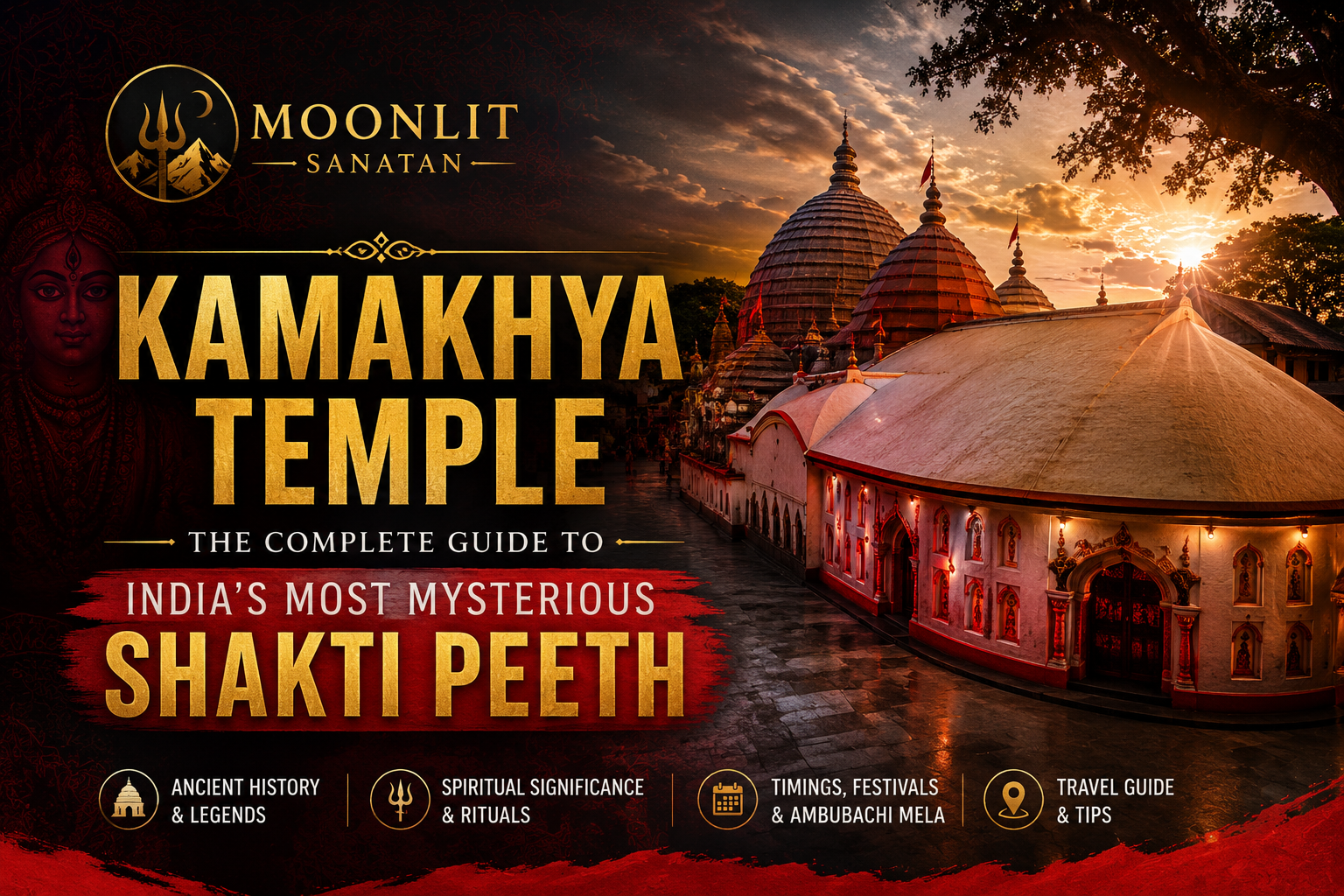
Perched on Nilachal Hill above the Brahmaputra, Kamakhya Temple is often reduced to a single word — "mysterious." The real story is older, stranger, and far more meaningful than that.
Why Kamakhya Temple Deserves More Than a Passing Glance
Most articles about Kamakhya Temple open with the word "mysterious" and then move on before actually explaining anything. That's a disservice to one of the oldest, most theologically important temples in India — and honestly, to the millions of devotees who travel here every year with real faith, not just curiosity.
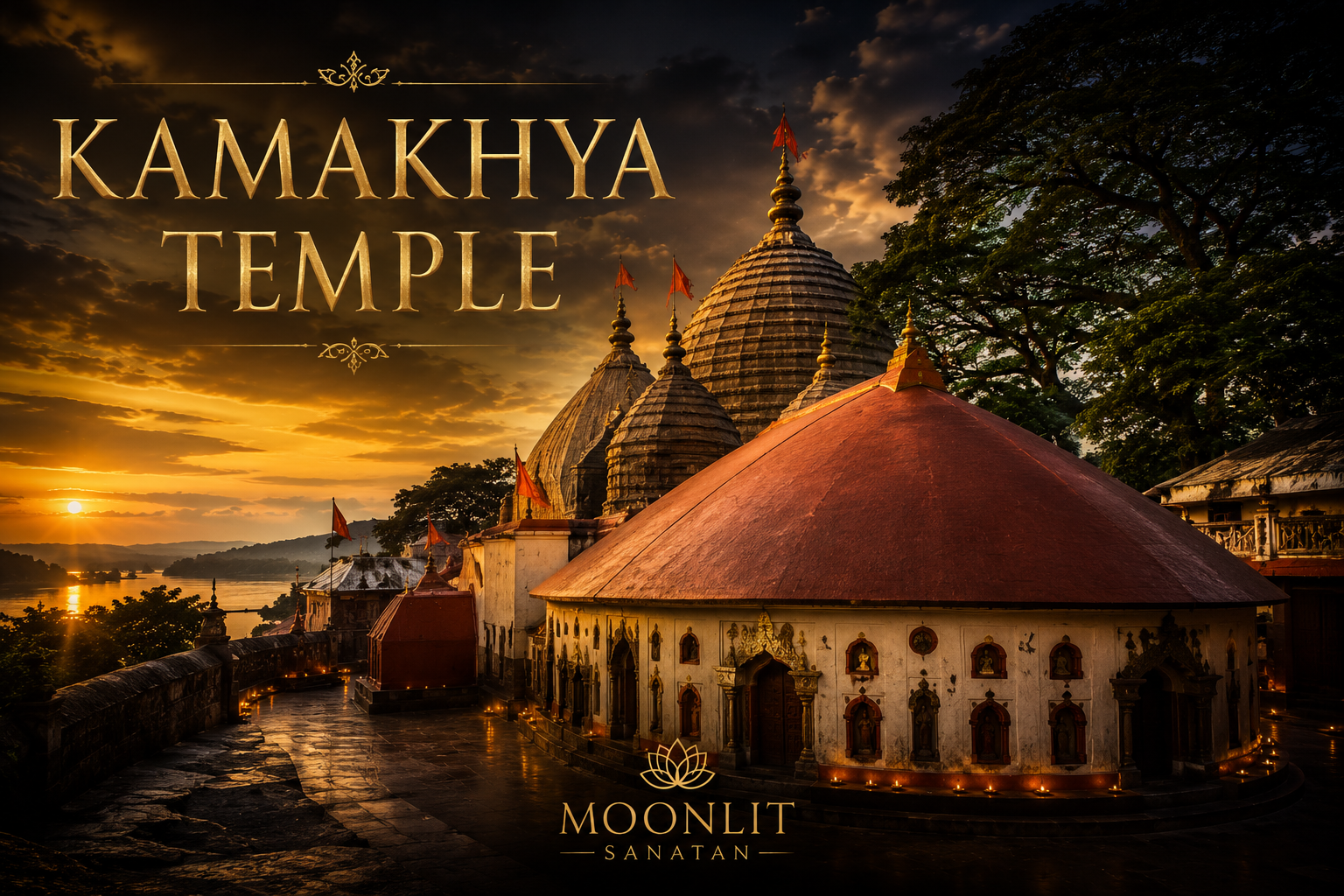
Kamakhya Temple sits on Nilachal Hill overlooking Guwahati and the Brahmaputra River in Assam. It is one of the four oldest of the 51 Shakti Peethas in Hindu tradition, and the principal center of Tantric Shaktism in India. Unlike most Hindu temples, there is no idol inside its sanctum — devotees worship a natural rock formation shaped like a yoni, representing the goddess's generative, creative power.
That single detail is why so much online writing about this temple veers into sensationalism. This guide takes a different approach: real history (including where the popular story gets it wrong), the actual legend behind the temple, an honest look at its most talked-about "mystery," and everything you need to know if you're planning a visit yourself.
What Makes Kamakhya Temple Different From Other Shakti Peethas
India has thousands of temples dedicated to the divine feminine, but Kamakhya occupies a genuinely singular place among them. It's one of only four Shakti Peethas dated to the 8th–9th century, making it among the oldest continuously worshipped sites in the entire Shakta tradition.
- 🪨No idol, only a natural yoni-shaped rock — worship here centers on an aniconic stone formation kept moist by a natural underground spring, not a carved or cast image of the goddess.
- 🧘The seat of Tantric Shaktism — Kamakhya is the historic center of the Kulachara Tantra Marga, practiced by both vamachara (left-hand path) and dakshinachara (right-hand path) traditions.
- 🏛️A unique architectural style called Nilachal — a hybrid of North Indian Nagara and Islamic Saracenic influences, born out of a 16th-century reconstruction effort we'll get to shortly.
- 🩸The only major temple that celebrates menstruation as sacred — through the Ambubachi Mela, a festival with no real parallel anywhere else in mainstream Hindu practice.
Each of these threads deserves proper unpacking rather than a one-line mention, so that's exactly what the rest of this guide does.
Kamakhya Temple's History — And Where the Popular Story Gets It Wrong
Archaeological and epigraphic evidence points to a massive temple structure at this site dating to the 8th–9th century, with the earliest confirmed inscription appearing on the 9th-century Tezpur plates of King Vanamalavarmadeva. Long before that, historical records suggest worship at Nilachal Hill traces back to indigenous Kirata traditions, later absorbed into the wider Brahminical Shakta fold.
The Kalapahar Story — And Why Historians Now Doubt It
Almost every travel blog repeats the same claim: that the original temple was destroyed by Kalapahar, a general serving the Bengal Sultanate, sometime in the mid-16th century. It's a dramatic story — and according to historical research, it's very likely wrong.
The timeline simply doesn't hold up. Kalapahar's documented military campaign against the Koch kingdom took place in 1568 — three years after King Naranarayan had already completed the temple's reconstruction in 1565. Historian D. Nath's research (cited on the temple's Wikipedia entry) also notes there's no evidence Kalapahar ever advanced as far east as Guwahati during that campaign. The more historically consistent explanation points instead to Hussein Shah's earlier invasion of the Kamata kingdom in 1498, or possibly one of the powerful earthquakes that struck the region during that era.
This isn't a minor footnote. It's a good reminder that even widely repeated "history" about ancient temples deserves a second look — and that Kamakhya's real story is interesting enough without needing an invented villain.
The 16th-Century Reconstruction That Shaped the Temple You See Today
What we do know with confidence: after the site fell into ruin, Koch king Vishwasingha (1515–1540) rediscovered the ruins and revived worship there. His son, Naranarayan (1540–1587), supervised the temple's full reconstruction between 1555 and 1565, working closely with his brother and general, Chilarai.
According to the Darang-Rajavamsavali, a 17th-century chronicle, the masons initially struggled to rebuild the stone shikhara (temple spire) in its original form. They eventually adapted it into a distinctive 16-sided brick dome — the design that gave rise to the Nilachal style found across Assam's temples today. Later, the Ahom dynasty, particularly kings Rudra Singha and Rajeshwar Singha, expanded the complex further, adding the Natamandira (dance hall) and shrines to the ten Mahavidyas.
The Story of Kamakhya — Sati, Shiva, and the Origin of the Shakti Peethas
Behind every Shakti Peeth is a version of the same foundational story from the Kalika Purana and Devi Bhagavata Purana, and Kamakhya's telling is central to the entire tradition.
When King Daksha, Sati's father, held a great yajna (fire sacrifice) and deliberately excluded her husband Shiva out of contempt, Sati was consumed by grief and humiliation. Unable to bear the insult to her husband, she immolated herself in the sacrificial fire.
Shiva's grief was cosmic in scale. He carried Sati's body across the universe in the Tandava, his dance of destruction, threatening to unravel creation itself. To stop him, Vishnu released his Sudarshan Chakra, cutting Sati's body into pieces that fell across the Indian subcontinent. Each place where a part landed became a Shakti Peeth — a seat of the goddess's power.
At Nilachal Hill, it is believed that Sati's yoni fell, making Kamakhya one of the four original, oldest Shakti Peethas alongside Bimala, Tara Tarini, and Kamagiri traditions. The name itself is telling: Kamakhya is often understood as "she who fulfills desire," and the temple is intrinsically tied to fertility, creation, and the generative power of the feminine.
What Is the Real Mystery of Kamakhya Temple?
If you've searched "Kamakhya Mandir Rahasya" and landed here, you've probably already seen the clickbait version — vague talk of "black magic" and "forbidden rituals." The actual story is more layered, and frankly, more interesting than the sensational version.
The Yoni Worship Isn't a Curiosity — It's the Whole Point
Kamakhya's sanctum contains no statue. Devotees descend a narrow stone stairway to a small, dark cave-like chamber where a natural rock formation, shaped like a yoni and perpetually moistened by an underground spring, is worshipped directly. This isn't an eccentric detail bolted onto an otherwise "normal" temple — it's the entire theological foundation of the site. In Shakta philosophy, the yoni represents the womb of creation itself, the source from which all existence emerges. Academic historian Hugh Urban, who has written extensively on Kamakhya's role in Tantric history, describes the site as historically central to the Kulachara Tantra tradition and to successive Assamese ruling dynasties who patronized it as a source of both spiritual and political power.
The Ambubachi "Red Water" Phenomenon — Belief and Science, Side by Side
Every June, water at the temple's spring — and, according to popular belief, the nearby Brahmaputra itself — takes on a reddish tint. Devotionally, this is understood as the goddess's own menstrual cycle, a period during which Mother Earth herself is believed to menstruate. The temple closes its doors for three days in observance, reopening only after purification rituals.
A commonly cited natural explanation exists alongside the belief, and it's worth stating plainly rather than treating it as some hidden "gotcha": the region's soil and rock are naturally rich in iron deposits, and monsoon rainfall increases groundwater pressure and flow through those iron-bearing layers, which can tint water reddish through oxidation. Some accounts also point to ritual vermillion (sindoor) introduced into the sanctum during this period as a contributing factor to the coloring devotees observe.
Neither explanation cancels out the other. For devotees, the belief carries deep spiritual and cultural meaning tied to fertility and the sanctity of menstruation — a subject most religious traditions historically treated as impure, but which Kamakhya instead treats as sacred. For the curious, the natural explanation is a genuinely interesting footnote. Both can be true at once, and neither is worth mocking.
Ambubachi Mela: Everything You Need to Know
If Kamakhya Temple has one unmissable event on its calendar, it's the Ambubachi Mela — held annually around mid-June, when the sun enters the zodiac sign Mithuna and the Brahmaputra River is typically in monsoon spate.
- 🚪Day 1–3: The temple closes entirely. No puja, no scripture reading, and traditionally, devotees avoid cooking, farming, or other routine activities during this period, mirroring customary menstrual seclusion observances.
- ✨Day 4 (Nivritti): The temple reopens. The goddess is ceremonially bathed, and the sanctum is ritually purified before doors open to the public again.
- 🧧Angodak and Angabastra distributed. Devotees receive small pieces of red cloth (angabastra) and holy water (angodak) believed to have touched the sanctum during the closure — considered highly sacred prasad.
- 🙏Massive turnout. The mela draws lakhs of devotees, sadhus, and Tantric practitioners from across India and abroad, including practitioners who travel specifically for this window each year.
Exact Ambubachi Mela 2026 dates are set closer to the event based on the traditional Assamese calendar. Always confirm current-year dates via the temple's official channels before finalizing travel, since private vehicle access and hotel availability tighten significantly during this window.
Kamakhya Temple Timings and Darshan Hours
The temple is generally open from around 5:30 AM to 10:00 PM daily, though timings for the inner sanctum darshan can vary, especially around major rituals and festivals.
- 🌅Morning darshan: Typically begins around 5:30–8:00 AM, considered an auspicious window with shorter queues.
- 🌇Evening aarti: Usually held in the early evening; exact timing shifts seasonally.
- ⚠️Ambubachi Mela and Durga Puja: Regular timings are suspended, with special schedules published closer to the event.
Given how often these hours shift around festivals, it's worth checking the temple's official notices or a recent visitor report before you travel, rather than relying solely on any single blog's listed hours — including this one.
How to Reach Kamakhya Temple
Kamakhya Temple's location on Nilachal Hill in western Guwahati makes it accessible by all three major modes of transport, with the temple itself well connected to the rest of Assam and neighboring states.
| Mode | Nearest Point | Approx. Distance |
|---|---|---|
| By Air | Lokpriya Gopinath Bordoloi International Airport (Guwahati) | ~20 km from the temple |
| By Rail | Kamakhya Junction (dedicated station) or Guwahati Railway Station | ~6–8 km from the temple |
| By Road | Well-connected via NH27 and city roads from central Guwahati | ~15–20 minutes from Guwahati city center |
From Kamakhya Junction or Guwahati Railway Station, local taxis, auto-rickshaws, and app-based cabs are readily available for the final stretch up Nilachal Hill. During the Ambubachi Mela, private vehicle movement near the temple is often restricted, with shuttle services arranged instead — so plan for a walk up the last portion of the hill if you're visiting during that period.
VIP Darshan and Online Booking at Kamakhya Temple
Given the sheer volume of daily visitors, the temple offers a paid Special/VIP darshan pass that allows devotees to bypass the general queue, which can otherwise run into hours, particularly on weekends and during festivals.
- 💳Special darshan tickets can typically be purchased at counters near the temple complex on the day of your visit.
- ⏱️Wait-time reduction is the primary benefit — general queues during peak season and festivals can otherwise take several hours.
- 🌐Book only through official channels. Always verify booking portals and counters directly through the temple's recognized management rather than third-party sites or agents claiming guaranteed access.
As with most major pilgrimage sites in India, unofficial "guides" and touts sometimes offer inflated VIP darshan promises near the entrance. Confirm pricing and legitimacy through the temple's official counters before paying anyone.
What Not to Do at Kamakhya Temple
Like most major Shakti temples, Kamakhya has customs worth knowing before you visit, both out of respect and to avoid confusion at the entrance.
- 👞Remove footwear before the temple approach — designated footwear stands are available near the entrance.
- 👗Dress modestly. Shoulders and knees covered is a safe standard; avoid overly casual or revealing clothing.
- 📵Photography inside the sanctum is typically restricted. Rules can vary and are enforced by temple staff, so always check signage or ask before photographing near the inner shrine.
- 🐐Animal sacrifice does take place as part of certain traditional rituals at the temple. If this isn't something you wish to witness, ask temple staff about the sacrifice area's location so you can plan your route accordingly.
- 🚶Follow queue and crowd-management instructions, especially during the Ambubachi Mela, when crowd density is extremely high.
Where to Stay Near Kamakhya Temple
Most pilgrims base themselves in Guwahati city, which offers everything from simple dharamshalas to full-service hotels, all within a short drive of Nilachal Hill.
- 🏛️Temple-trust guesthouses and dharamshalas near the base of Nilachal Hill, offering basic, budget-friendly accommodation geared toward pilgrims.
- 🏨Hotels across Guwahati city, ranging from budget to premium, generally 15–30 minutes from the temple by road.
- 📆Book well in advance during the Ambubachi Mela — accommodation across price ranges fills up quickly in the weeks leading up to the festival.
Kamakhya's Place Among the 51 Shakti Peethas
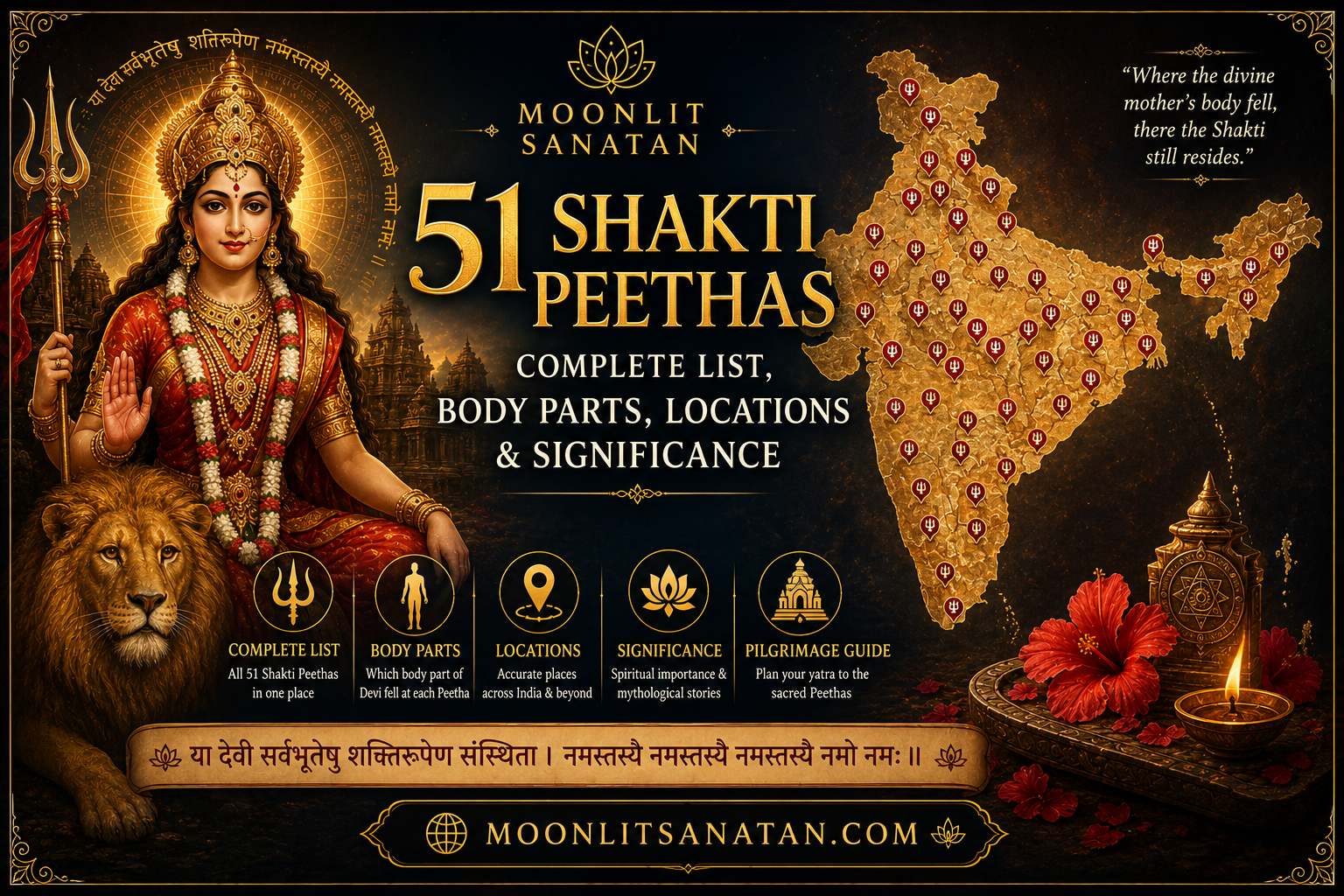
Kamakhya isn't just one of many Shakti Peethas scattered across the subcontinent — it's considered one of the four oldest, alongside a small handful of sites tied to the earliest layers of Shakta worship. Understanding this broader tradition helps explain why devotees travel here from across India, Nepal, and beyond, often as part of a wider Shakti Peeth pilgrimage circuit.
📝 Internal link opportunity: link this paragraph to a dedicated "51 Shakti Peeth" pillar article if Moonlit Sanatan has one published, giving readers the full list and context for how Kamakhya fits within it.
Best Time to Visit Kamakhya Temple
| Season | What to Expect |
|---|---|
| October – April | Pleasant weather, comfortable sightseeing, moderate crowds — best for a general pilgrimage or first visit. |
| Mid-June (Ambubachi Mela) | Peak spiritual significance and festival atmosphere, but extremely crowded, monsoon weather, and limited private vehicle access. |
If your goal is a calmer, more contemplative visit, aim for the cooler months. If you specifically want to witness the Ambubachi Mela's unique energy, June is non-negotiable — just plan logistics well ahead of time.
Continue the Journey With Us
We regularly share temple histories, festival guides, and Sanatan Dharma traditions across our pages — a good way to keep discovering places like Kamakhya beyond a single article.
Frequently Asked Questions About Kamakhya Temple
Why is Kamakhya Temple famous?
Kamakhya Temple is famous as one of the oldest of the 51 Shakti Peethas, believed to mark the spot where Sati's yoni fell. It's the principal center of Tantric Shaktism in India, known for its aniconic yoni-shaped sanctum and the annual Ambubachi Mela, which celebrates the goddess's symbolic menstruation.
What is the history of Kamakhya Temple?
Archaeological evidence points to an 8th–9th century origin, with the earliest inscription found on the 9th-century Tezpur plates. After falling into ruin — likely due to Hussein Shah's 1498 invasion or a regional earthquake, rather than the commonly cited Kalapahar story — the temple was rediscovered by Koch king Vishwasingha and fully rebuilt by his son Naranarayan between 1555 and 1565, giving rise to the distinctive Nilachal architectural style.
What is the story (legend) of Kamakhya Temple?
The legend traces back to Sati's self-immolation after her father Daksha insulted Shiva. Grief-stricken, Shiva carried her body across the universe until Vishnu's Sudarshan Chakra cut it into pieces, each landing site becoming a Shakti Peeth. At Nilachal Hill, Sati's yoni is believed to have fallen, establishing Kamakhya as one of the four oldest Shakti Peethas.
What is Ambubachi Mela and when is it celebrated?
Ambubachi Mela is a four-day annual festival held in mid-June, marking the goddess's symbolic menstrual cycle. The temple closes for the first three days, observing customs similar to traditional menstrual seclusion, and reopens on the fourth day (Nivritti) with purification rituals, after which devotees receive sacred red cloth (angabastra) and holy water (angodak).
How do I reach Kamakhya Temple?
The nearest airport is Lokpriya Gopinath Bordoloi International Airport, about 20 km away. The nearest railway station is Kamakhya Junction, roughly 6–8 km from the temple, with Guwahati Railway Station also nearby. The temple is well connected by road via NH27, about 15–20 minutes from central Guwahati by taxi or auto-rickshaw.
Is it safe and appropriate to take photographs inside the temple?
Photography inside the inner sanctum is generally restricted, and rules are enforced by temple staff. It's best to check current signage or ask on arrival, and to avoid photographing the sanctum area or ongoing rituals without explicit permission.
A Respectful Note
This article draws on historical research, temple records, and widely cited scholarship on Kamakhya Temple and Shakta Tantra tradition. Beliefs and practices described here are presented as they are understood within Hindu tradition and are not intended as a claim of objective scientific fact where noted otherwise. Timings, booking processes, and travel details can change — please verify current information through the temple's official channels before planning your visit.
Historical & Academic References
- 📖 Kamakhya Temple — Wikipedia (citing Nath, D. 1989; Urban, H. 2019; Sarkar 1992)
- 📖 Ambubachi Mela — Wikipedia
- 📖 Urban, Hugh B. — Academic writing on Kamakhya and Kulachara Tantra tradition, referenced in Kamakhya Temple historical scholarship
- 📖 Kalika Purana and Devi Bhagavata Purana — traditional textual sources for the Sati-Shakti Peeth legend
Have You Visited Kamakhya Temple? 🪔
Whether you've made the climb up Nilachal Hill yourself, attended the Ambubachi Mela, or you're just discovering this temple's story for the first time — we'd love to hear your experience. Drop a comment below and share what struck you most about Kamakhya's history, legend, or energy. 💬
Want More Temple Histories and Sanatan Dharma Guides Like This?
Moonlit Sanatan explores the real stories, scholarship, and living traditions behind India's most significant sacred sites — no sensationalism, just genuine reverence.
📸 Follow on Instagram 📌 Follow on Pinterest